
How Tall Should a Standing Desk Be?
Standing desks are becoming increasingly popular, with more people aiming to improve their health and posture while working. A standing desk can help you stay comfortable and productive throughout the workday.
But how tall should a standing desk be? The answer varies depending on your height, posture, and personal needs. Finding the right desk height is crucial for maintaining good ergonomics and avoiding strain on your neck, back, and wrists.
Content Guide:
- How Tall Should a Standing Desk Be?
- Why Does Standing Desk Height Matter?
- Finding Your Ideal Standing Desk Height
- Standing Desk Height for Different Heights [Calculator & Chart]
- Adjustable Standing Desks: The Best of Both Worlds
- Benefits of Using a Standing Desk
- What Not To Do When Using a Standing Desk
Why Does Standing Desk Height Matter?
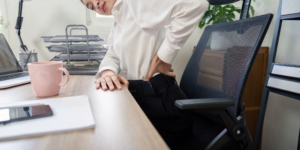
If your standing desk is too high or too low, it can lead to strain on your back, neck, and shoulders. You want to aim for good ergonomics, meaning your posture should be as neutral and relaxed as possible.
Proper desk height allows your arms, wrists, and neck to stay in a comfortable, healthy position, reducing the risk of discomfort or long-term injury. Finding the right height not only improves comfort but also boosts your focus and efficiency while working.
Finding Your Ideal Standing Desk Height
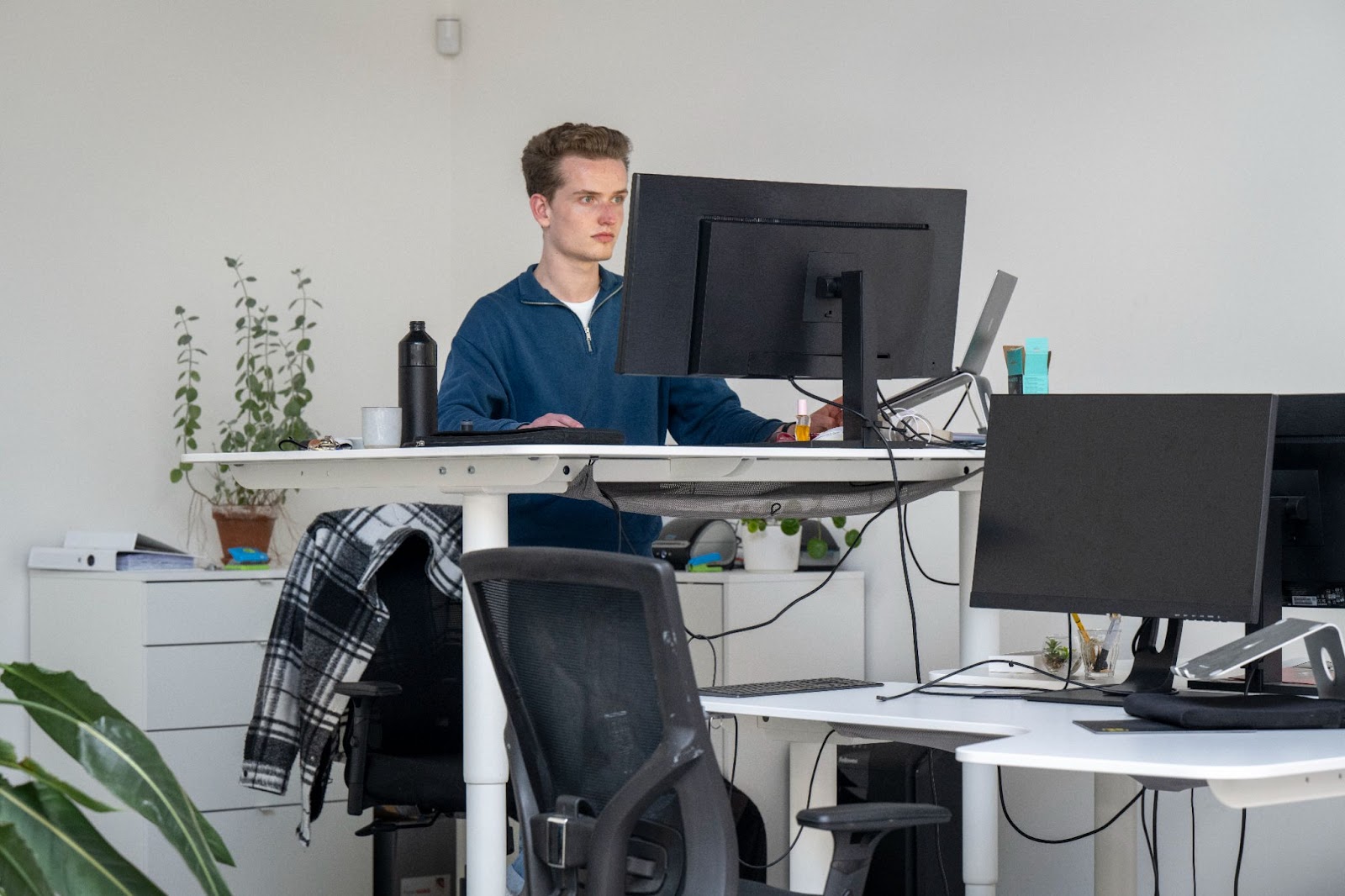
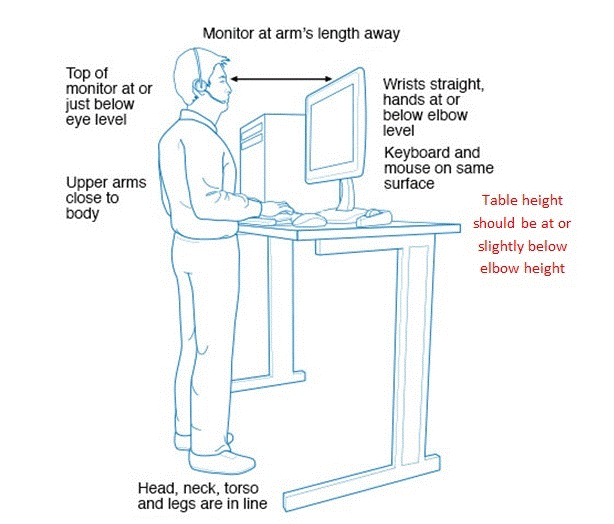
The golden rule is that the desk should be at elbow height. When standing, your elbows should form a 90° to 110° angle, which allows for correct posture and helps prevent any strain on your muscles. Here’s how to check:
- Stand up straight with your shoulders relaxed.
- Bend your elbows to a 90° angle.
- Ensure your forearms are parallel to the ground as you type.
- Adjust the top of your screen so it’s at eye level.
Standing Desk Height for Different Heights [Calculator & Chart]
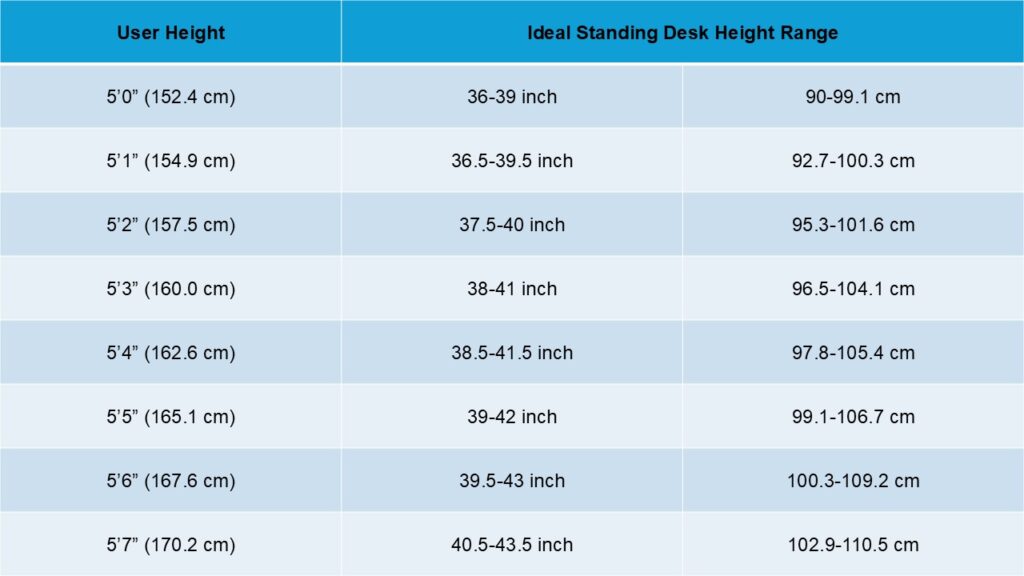
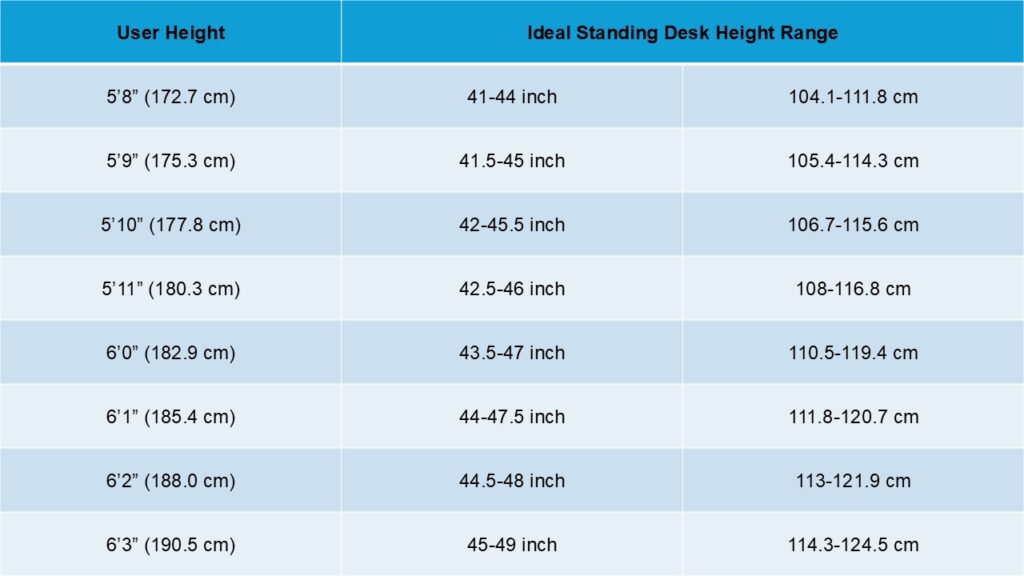
For most people, an ideal desk height is between 94 cm and 122 cm, but it’s best to tweak it based on your own height. Not sure where to start? There are plenty of standing desk height calculators online to guide you. For a quick reference, take a look at the standing desk height range chart below.
Adjustable Standing Desks: The Best of Both Worlds
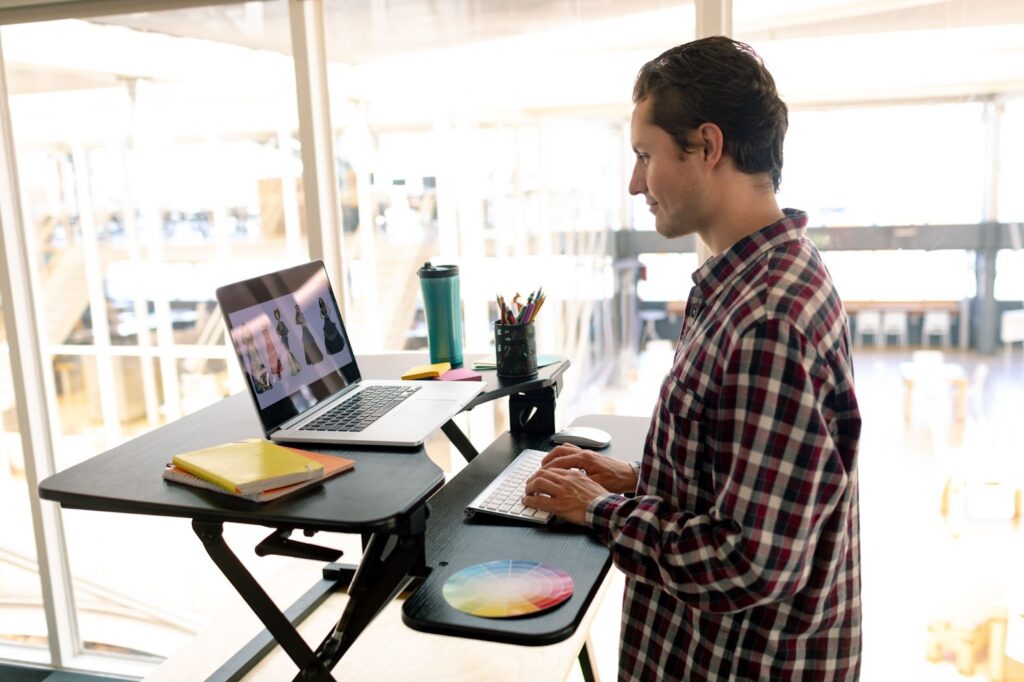
For full control over your setup, an adjustable desk is your best option. These desks let you switch between sitting and standing, helping you alternate positions throughout the day. Many come with preset height settings, so you can quickly adjust to your ideal height whenever needed.
Choose an adjustable desk that fits your space and is made from durable materials. Look for features like height presets and ensure it can support your equipment. Plus, you can choose a standing desk that matches your office decor for a stylish touch and customise it with other ergonomic equipment.
Benefits of Using a Standing Desk
Switching to a standing desk comes with health benefits. Here’s why a standing desk is better for your overall health:
- Better Posture: Standing desks promote better spinal alignment. When you’re upright, it’s easier to maintain a healthy posture, reducing the risk of back and neck pain.
- Increased Energy Levels: Ever feel sluggish after hours of sitting? Standing can boost your energy and keep you alert, enhancing your productivity throughout the day.
- Calorie Burn: Did you know standing burns more calories than sitting? While it’s not a workout, incorporating standing into your routine can help manage your weight over time.
- Flexibility: Adjustable desks allow you to find the right height. This helps minimise strain on your body.
- Reduced Risk of Chronic Diseases: Prolonged sitting is linked to health issues like diabetes and cardiovascular disease. Standing more often can mitigate these risks.
- Enhanced Mood: Users often report improved mood and reduced feelings of fatigue when using a standing desk. This can contribute to a more positive work environment.
What Not To Do When Using a Standing Desk
There are a few things to keep in mind to ensure you’re getting the most out of your setup without causing unnecessary strain:
- Standing for Too Long: It’s important to alternate between sitting and standing. Prolonged standing can lead to fatigue, varicose veins, or joint pain. Aim for a mix of sitting and standing for a balanced work routine.
- Poor Posture: Whether sitting or standing, posture matters. Keep your shoulders relaxed, and your spine straight to avoid back pain. Your screen should be at eye level to prevent neck strain, so adjust your monitor height accordingly.
- Lack of Movement: Standing still for hours can be just as problematic as sitting. Incorporate small movements, like shifting your weight or stretching, to encourage better circulation and prevent stiffness.
- Inappropriate Footwear: Hard surfaces can strain your feet. Wear supportive footwear or use an anti-fatigue mat to stay comfortable during long standing sessions.
Conclusion
A standing desk can improve your comfort and productivity when used correctly. Keep your desk at the right height to avoid strain, and make small tweaks as needed to suit your tasks. Move when you need to, and adjust your setup if something feels off. You will create a more comfortable, efficient, and healthy workspace that supports your day-to-day tasks.
For more ergonomics tips, check out our blog or get your very own standing desk now!